
Collectors and Their Passions (2025)
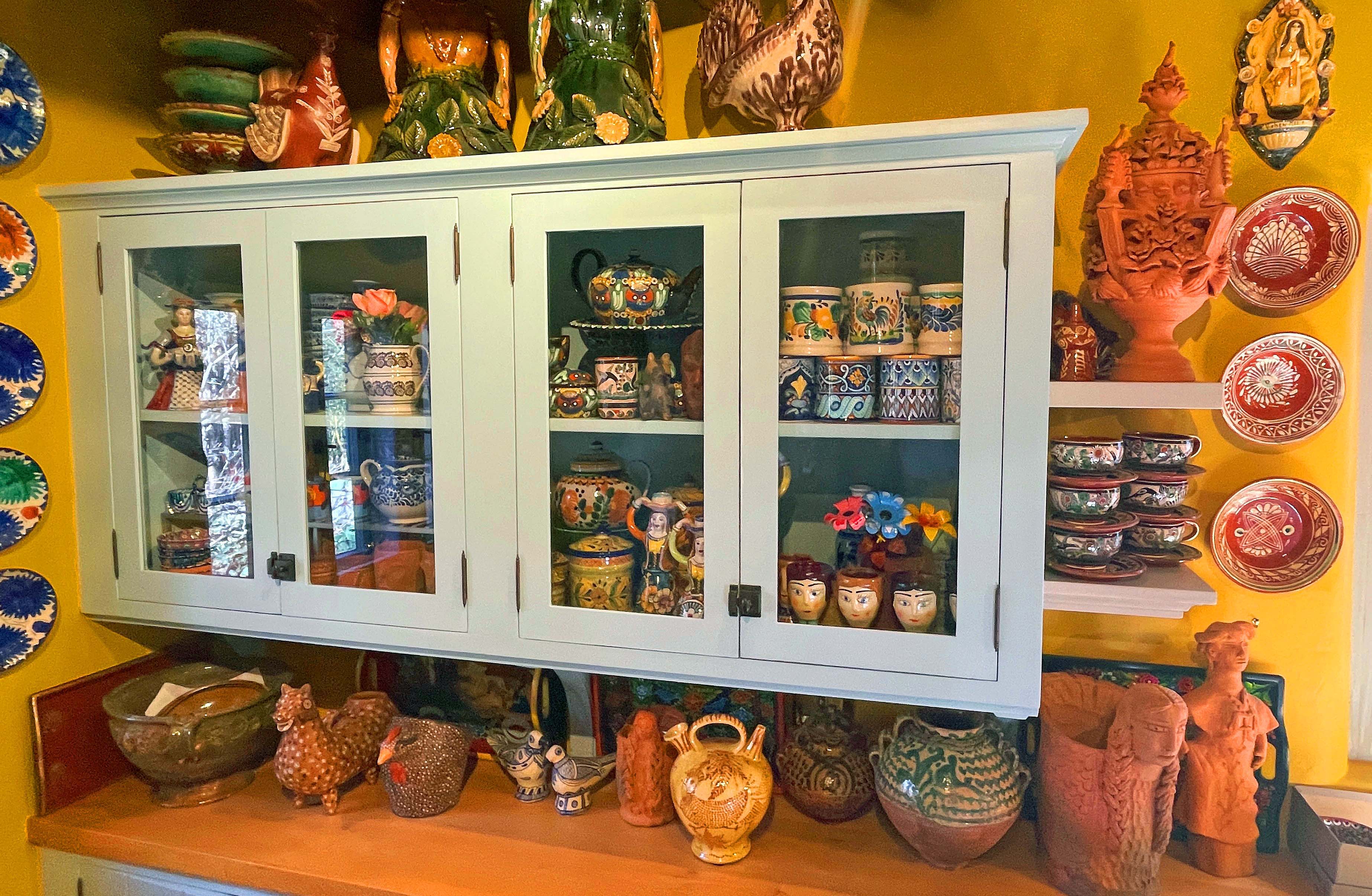
—March 2025— For the past four months I’ve been interviewing serious collectors. About two thirds of the interviewees are residents of Santa Fe, at least part-time. I’ve also undertaken online interviews with collectors in Michigan, Oregon, North Carolina, and Maryland, mostly to capture greater diversity of experience and collecting focus. It’s hardly a surprise that given my location, many of my interviewees are collectors of art, especially Native American art. Others interviewed so far have amassed impressive assemblages of historic firearms, quilts, mechanical puzzles, first-edition mystery novels, majolica earthenware, objects made in the Jim Crow South, and items from Afro-Atlantic religious traditions. With few exceptions, these passionate collectors have been affluent and in some cases spectacularly wealthy.
Although anthropologists have been writing about—and criticizing—museums for three decades (I’m one among many), they have written relatively little about private collectors. This is surprising given the deep connections between individual collectors and museums. After all, the majority of museums originated in private collections, and today many collectors continue to dream of eventually having their personal collections in the perpetual care of institutions such as the Met, the Smithsonian, the Getty, and the like. Studies of private collecting are dominated instead by scholars in sociology, history, psychology, and Museum Studies.1
Writing about these affluent interviewees, whose collections may represent a breathtakingly large financial investment, is proving to be a challenge for an anthropologist such as myself, whose previous work has mostly focused on the social lives of Indigenous peoples fighting for their physical and cultural survival. In a moment when economic inequality in the US rises to unprecedented levels, what is an appropriate way to think and write about the people whose wealth allows them to accumulate staggering quantities of high-status material goods?
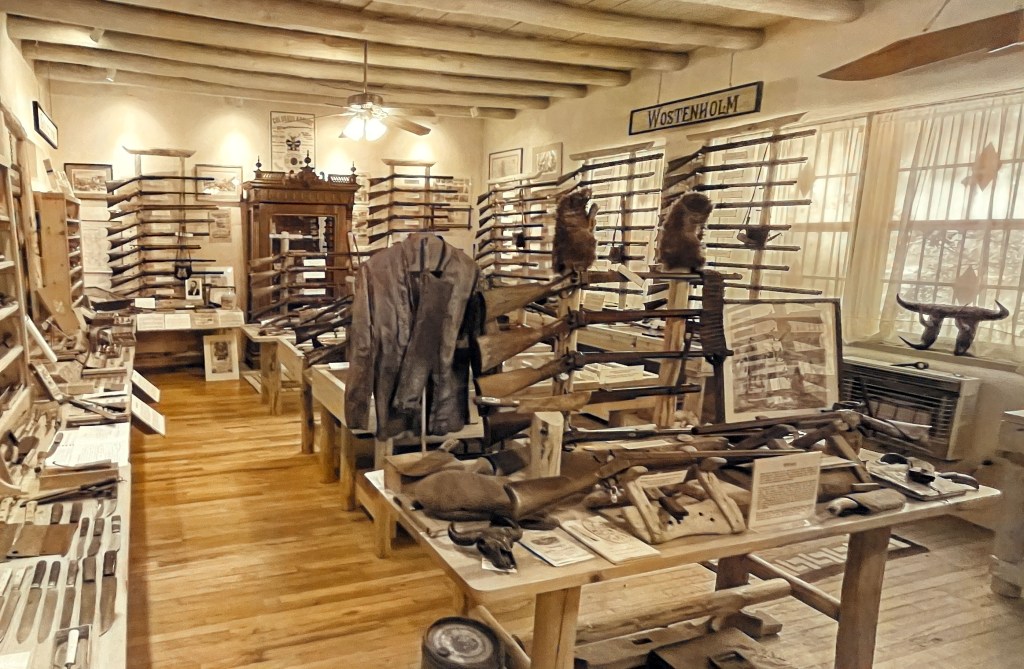
Part of a private Western Americana collection near Santa Fe.
I hasten to add that my interviewees are in the main smart, likeable, open-minded, and philanthropic. Those who collect the art works of contemporary Native American artists from the Southwest, for example, take pride in their personal relationships with artists, whose livelihood—and sometimes that of entire communities—depends on the sale of their pottery, jewelry, sculptures, or paintings. One particularly inspiring collector, a wealthy South Asian businessman, has founded and funded a Santa Fe organization that has acquired nearly 5000 works of art regularly loaned at no cost to museums all over the United States. He firmly believes that visual arts are a creative, uplifting resource that should be made available to people whose financial circumstances prevent them from possessing such art works themselves. He insists on anonymity because he wants the focus to be on the art works rather than their owner.
It would be easy to disparage the acquisitiveness that even some interviewees describe half-jokingly as an affliction. Indeed, the literature on collectors often portrays their passion as a form of madness. The psychiatrist Werner Muensterberger argues that “in some instances collecting can become an all-consuming passion, not unlike the dedication of a compulsive gambler to the gaming table—to the point where it can affect a person’s life and become the paramount concern in his or her pursuit, overshadowing all else: work, family, social obligations and responsibilities” (Collecting: An Unruly Passion, Princeton University Press, 2004).
Although there is some truth in this, collecting is also an intellectual challenge and sometimes even an adventure. Here I’m thinking of the thrill of the hunt as a collector struggles to locate and acquire an object to complete a meaningful set. When a collection eventually makes its way from an individual’s hands to the care of public repositories, as many collectors desire as part of their personal legacy, they remove important works from the world of commerce and private ownership to be enjoyed by the general public.
For now I’m trying to revive a state of mind akin to one that that proved useful when writing about New Age practitioners of channeling in the 1990s. For that project, my approach landed somewhere between sympathetic skepticism and skeptical sympathy but mostly left judgment to my readers. This frustrated some reviewers of my ethnography, who complained that I hadn’t denounced my interlocutors for the supposed silliness or narcissism of their spiritual practices, a point of view that for these reviewers was apparently acceptable for entitled members of the bourgeoise but unacceptable when writing about, say, the Hopi or the Mundurucú.2 The expectation that ethnographers will maintain a degree of moral distancing is one of anthropology’s greatest contributions, one that we should abandon only in unusual circumstances.
_________________________
- One of the pleasures of this project has been discovering the work of Susan M. Pearce, Professor Emeritus of Museum Studies at the University of Leicester. Her magisterial study On Collecting: An Investigation into the Collecting in the European Tradition (Routledge, 1995) explores the long history of personal collecting in the West as well as questions of value, cultural heritage, and social class.
- A review of The Channeling Zone in the New York Times snarkily described my interlocutors as “gifted raconteurs, comics, quick-change artists, outright frauds and well-meaning seers,” some of whom are “chirping away in neo-Aztec accents.” (None of these terms appeared in my book, nor did I ever encounter neo-Aztec chirpers.) After some positive observations about the book, the reviewer expresses the wish that “Mr. Brown had been less the ‘participant-observer’ and more the hard-nosed critic.” By the time The Channeling Zone appeared in print, countless “hard-nosed” critiques of channeling and New Age practices were already in print. Few explored the relationship to spiritism in early America as well as forms of spirit possession common in the Global South.
 UPRIVER
You must be logged in to post a comment.