
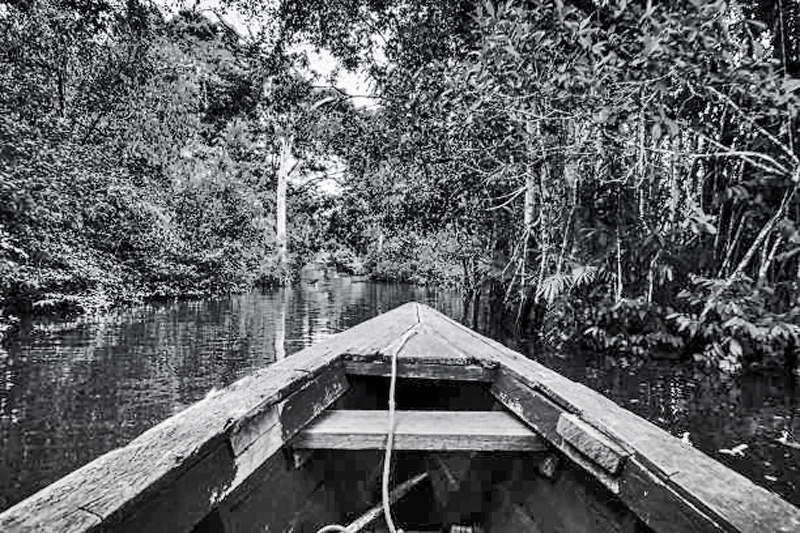
It happens to most people eventually. It’s called retirement. Friends and colleagues typically offer congratulations, which has always struck me as odd, as if aging were some kind of achievement. For most of us, retirement is voluntary unless one is an airline pilot, an astronaut, a brain surgeon, or an unlucky person who has suffered a debilitating disease or injury. Then there are those who should retire but delay too long: fading athletes, arthritic rock stars, perhaps the occasional president. I’ve passed that threshold after a decade running a Santa Fe research center that I had long admired and was honored to lead. The text of my farewell statement is available on SAR’s website. A short video reflection can be found on SAR’s YouTube channel.
When asked about what the retiree is likely to do when liberated from a workplace, the conventional replies include—in no particular order—travel, spend more time fly-fishing, dandle one’s grandkids (I have none so far), learn a foreign language, and volunteer at a non-profit organization. Retirees of the academic species seem either to renounce their former career entirely or redirect their energy to writing projects postponed to accommodate former administrative responsibilities and eager graduate student advisees. I lean in the latter direction, although after ten years of writing routine reports and newsletter text it may take a while to recover my scholarly groove. In the short run, I’m inclined to offer here thoughts on such topics as land acknowledgments, the fascinating complexities of repatriation to Indigenous communities, and frustration with obscurantist academic language in a time of national crisis. We’ll see.
 UPRIVER
You must be logged in to post a comment.