
[Posted November 2015]
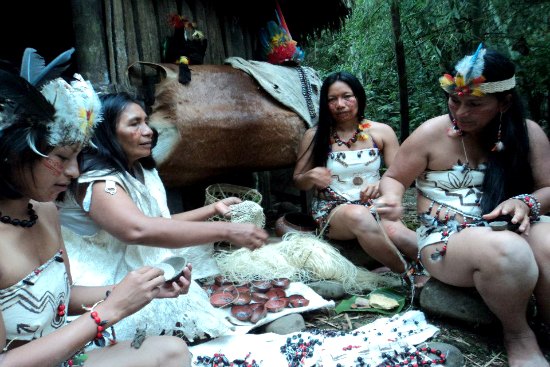
At a time when so much of the utopian promise of the Internet seems to have soured thanks to ubiquitous trolling, corporate surveillance, and blatant commercialism, it’s refreshing to be reminded of the pleasant surprises that it still can offer. One of these was my discovery of the article “Secret Reserves,” written by the journalist Pablo Calvi and recently published in the magazine The Believer, a publication previously unfamiliar to me but which I intend to visit often.
Calvi’s article deals with the circumstances of an indigenous people of Amazonian Ecuador known as Sápara (or Zápara or Záparo). In some ways the piece is a conventional cautionary tale of a society struggling to survive amid the scramble for natural resources—in this case, petroleum, arguably the most sinister substance of all with respect to its economic power and poisonous effects—in an environmentally fragile frontier zone. But the author brings to the story an unusual level of descriptive brio as well as attention to the complexity of the situation. Contributing to the latter are conflicts between and within indigenous populations over the best strategy for dealing with the Ecuadorian state and the corporations whose activities it relentlessly promotes. Descriptions of Sápara prophetic dreaming are interwoven with assessments of Ecuadorian politics and development policies.
Some passages that capture the flavor of the article:
There’s a steel vein running through the Andes from east to west, a warm, hollow line that sucks out the guts of the jungle, four hundred thousand oil barrels at a time.
Francisco is short and fibrous. The Sápara call him Tio Rango (Uncle Rango), which gives him an aura of familiarity and kinship. People say that, back in the day, he was Manari’s father’s bodyguard. Whether he was or not, he is certainly the village’s muscle. He has curious black eyes and a staccato voice tuned to give orders but used mostly to crack jokes in Kichwa that everybody seems to love.
I’m naive enough to believe that such evocative writing might do more to change minds and hearts and policies than does anthropological prose, either of the strictly utilitarian variety or high-flown ruminations on Amazonian ontologies and the like. Each kind of writing has its place, I suppose. And each is afflicted by a degree of political impotence. The current free-fall of world oil prices probably does more to help the Sápara than anything that Pablo Calvi or anthropologists might write. Which of course is not sufficient reason to forsake hope or the responsibility to witness or a commitment to struggle when points of political leverage present themselves.
For more on the Sápara, see the Academia.edu page of Anne-Gaël Bilhaut, which includes downloadable publications in French, Spanish, and English.



 UPRIVER
You must be logged in to post a comment.